

Autistic Masking
What it is and what it costs

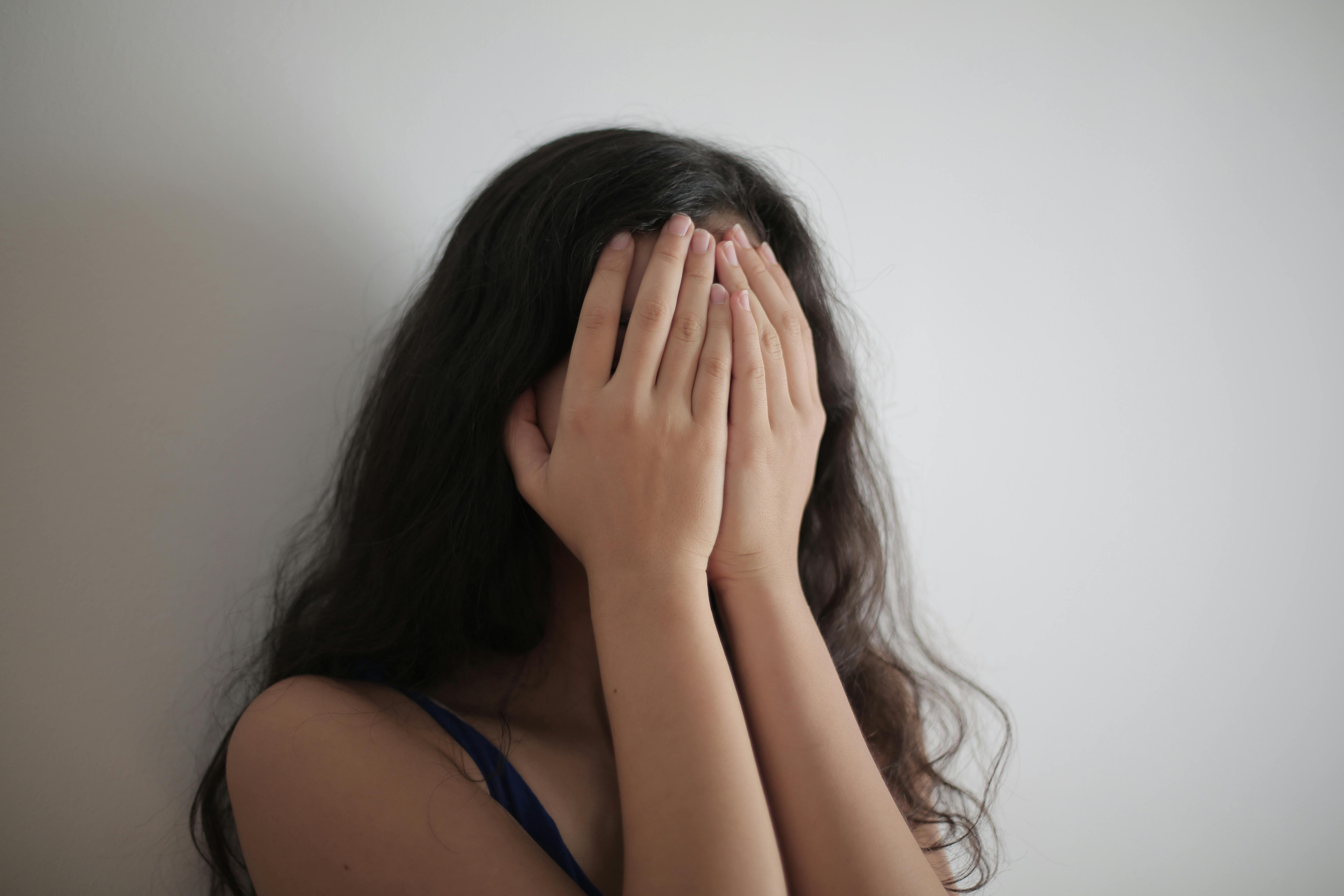
If I had to pick one word to describe my life and purpose up until now, it would be performance.
My entire life has felt like a performance—each morning I wake up, put on my mask, and perform. Don’t we all, to some extent? We put on our “professional face,” our “parent face,” or whatever face we need to perform our duties. Most of us want to be our best selves.
It wasn’t until I began researching autism that I understood the extent to which I masked, and that masking can be a trauma response.1 How? I thought, considering I didn’t carry any significant trauma. Over time, I began to realize that this trauma response was due to suppressing an entire life of autistic traits (without even knowing I was autistic).
So let’s define what autistic masking is, and what makes it different.
What is autistic masking?
“Autistic masking refers to autistic people suppressing their natural autistic traits, responses, and behaviors, in an attempt, consciously or unconsciously, to hide or reduce the visibility of their autistic traits, autistic identity, or autism diagnosis.”2
In short, autistic masking is hiding one’s autistic traits in order to survive.
Below is a list of ways autistic people may mask their traits.
Hiding stims
Repetitive body movements used (often unknowingly) to self-regulate, including body rocking, swaying, hand-flapping, picking or scratching at one’s skin, twirling or pulling one’s hair, tracing patterns on one’s skin or clothing, playing with jewelry, chewing lips or the inner cheeks, clenching and releasing muscles (hands or toes), and more.
Forcing eye contact
This may feel like being really good at eye contact.
Mimicking others
Including changing one’s tone of voice, responses, or personality to match someone else’s in order to fit in.
Hiding one’s sensory distress
This may include sensory distress from bright lights, sounds (including subtle ones, like the sound of a fan or the ticking of a clock), textures or the pressure of clothing (not just tags or scratchy wool, but uncomfortable waistbands, restrictive clothing, or clothing that isn’t restrictive enough), temperature changes, and other environmental factors.
Rehearsing and learning scripts
This may be done while watching movies or TV, but also in more subtle ways, such as learning from those around you and running conversations in your head beforehand to help build a social script for real-life conversations that may take place.
People-pleasing and being generally agreeable
This is often done, again, to fit in and avoid confrontation.
Forcing facial expressions
In an effort to blend in and be agreeable, this might include smiling and nodding, or mimicking the other person’s facial expressions.
Managing communication
This may include not talking about one’s special interests so as not to talk too much. It could also include not asking for clarification when confused, and appearing gullible or naive to avoid seeming unintelligent (again, nodding and smiling).
Hypervigilance
Being overly aware of one’s environment, how one is presenting themselves and coming across, and reading into social cues with such intensity that they may actually miss the point.
Perfectionism
Having high standards and thus, sometimes unrealistic or rigid expectations of how things should be. Internalized, this might look like avoiding mistakes to avoid social judgment.
Not asking for one’s needs
Not setting boundaries, not advocating for oneself, not adjusting one’s sensory environment, and more.
Withdrawing or staying quiet
This may mean missing social engagements or simply staying quiet during gatherings, as well as needing more downtime after socialization or other expectations, such as work.
Unconscious masking
As I mentioned earlier, I’ve masked my entire life, but I’ve never really understood why or to what extent. It should also be noted that masking is a protective mechanism, and not necessarily something that one does consciously or by choice.3
For example, I was raised a pastor’s kid, so I assumed my perfectionism was due to trying to follow the pastor’s kid script (and autistic people love scripts; they’re safe, predictable, and show us what we need to know to fit into a neurotypical society).
I also assumed my consistent performance was due to growing up as a ballet dancer and spending hours each week performing in front of a mirror. I was always aware of my body and what it looked like, how it moved, how it performed. As it turns out, something like dance is a great self-soothing stim for a neurodivergent brain like mine, as it requires lots of repetition. Each week, you perform the same set of exercises, gradually adding a few more moves each week, until you’re ready to perform.
But I masked in other ways that I was either unaware of or assumed everyone did, too. Being agreeable is common for girls and women who are taught to be polite and submissive (which is just one tiny example of how someone can pass as neurotypical and not receive an autism diagnosis until much later in life—I received mine at 37).
The thing is, it wasn’t until I began studying autism (and not what is depicted in media and pop culture) that I began to see a version of myself.
The cost of masking
Once I became aware of my masking, I was no longer able to maintain it.
And this is common: with prolonged masking (or camouflaging, as it’s also called), an individual is less likely to maintain their masking abilities due to burnout.4
Some may call this a regression of skills, and this is certainly what I have experienced. However, with more time, I’ve begun to understand it more as returning to my natural state and as needing more accommodations.
Here are a few examples of what skill regression may look like:
Increased burnout. I used to be able to go-go-go and then naturally burn out every few months. This is now happening to me weekly, sometimes daily. Burnout can cause meltdowns or shutdowns (a complete withdrawal).
Heightened sensory sensitivities. Things once tolerated become unbearable (such as clothing textures, lights, sounds, etc.). One example for me has been experiencing significant distress in grocery stores due not only to the lights and sounds but also to decision fatigue, interactions with people, and all of the transitions.
A decline in social abilities. This might be withdrawing from people or no longer being able to engage in social expectations previously managed.
Difficulty meeting work or school obligations. Deadlines become harder to keep, and one’s performance may decline.
Challenges with daily living and decision making. Tasks such as cooking, cleaning, hygiene, and house management may become more difficult to complete.
Skill regression is not permanent, but autistic masking has significant effects on people and can lead to things like anxiety, depression, autistic burnout, and even suicide.5
It’s a signal that change is needed, whether that means more rest, other accommodations, or likely, both.
I also think that once you become aware of your mask, it truly does feel impossible to put back on. You realize it doesn’t feel good, so why would you want to keep forcing yourself to adapt to situations that are actually harmful?
There are so many other ways masking costs us, and if you’re interested in learning more, I’d suggest reading Unmasking Autism by Devon Price, specifically chapter 4, The Cost of Masking.
Where to go from here
I will end with this: I’ve been experimenting with unmasking—which is another post for another time—and it has been incredibly freeing. I’m finding new ways of doing things that honour myself and help prevent burnout.
I should note, though, that I have the privilege to unmask, and not everyone can do so safely.
This is why I want to talk about autism: so many autistic people have been stigmatized, dismissed, or forced to mask themselves, leading to immense pain, isolation, and burnout. They’ve faced discrimination, a lack of support, and misunderstanding from the medical field, family, friends, and culture.
It also begs the question: why do so many people with disabilities have to alter their way of living in order to fit what’s deemed normal? Why is it not the other way around? Why are there not more accommodation services for people with differing needs? It’s such a basic thing when you think about it.
When autistic people can safely unmask, they begin to thrive. I’ve seen this with my own child as she learns to communicate her needs and desires, rather than masking, as I did. What a beautiful thing it is to witness her.
If any of this has resonated with you, I’d love to hear more about your experiences. Leave a comment and let’s chat more.
PS: I am not an autism expert. I am a late-diagnosed autistic individual who is studying autism as part of my master’s program, through a cultural lens and with writing as a tool to unpack the stereotypes regarding autism and its effects on our lives. These are my thoughts and experiences on autism, and it can look different in other individuals. We need space for all of these stories.
References:
Cleary, M., S. West, R. Kornhaber, and C. Hungerford. “Autism, Discrimination and Masking: Disrupting a Recipe for Trauma.” Issues in Mental Health Nursing 44, no. 9 (2023): 799–808. https://doi.org/10.1080/01612840.2023.2239916
Evans, J. A., E. J. Krumrei-Mancuso, and S. V. Rouse. “What You Are Hiding Could Be Hurting You: Autistic Masking in Relation to Mental Health, Interpersonal Trauma, Authenticity, and Self-Esteem.” Autism in Adulthood 6, no. 2 (2024): 229–240. https://doi.org/10.1089/aut.2022.0115.
Pearson, A., and K. Rose. “A Conceptual Analysis of Autistic Masking: Understanding the Narrative of Stigma and the Illusion of Choice.” Autism in Adulthood 3, no. 1 (2021): 52–60. https://doi.org/10.1089/aut.2020.0043.
Ali, D., Bougoure, M., Cooper, B., Quinton, A. M. G., Tan, D., Brett, J., Mandy, W., Maybery, M., Magiati, I., & Happé, F. (2025). Burnout as experienced by autistic people: A systematic review. Clinical psychology review, 122, 102669. https://doi.org/10.1016/j.cpr.2025.102669
Livingston, L. A., E. Colvert, P. Bolton, and F. Happé. “Compensatory Strategies Below the Behavioural Surface in Autism: A Qualitative Study.” The Lancet Psychiatry 6, no. 9 (2019): 766–777. https://doi.org/10.1016/S2215-0366(19)30224-X.
What are some accommodations that could serve a lot of people? Or, what can people in general be mindful of?
I know you can't speak for everyone, but if each person varies, how do we best accommodate someone we don't know well?